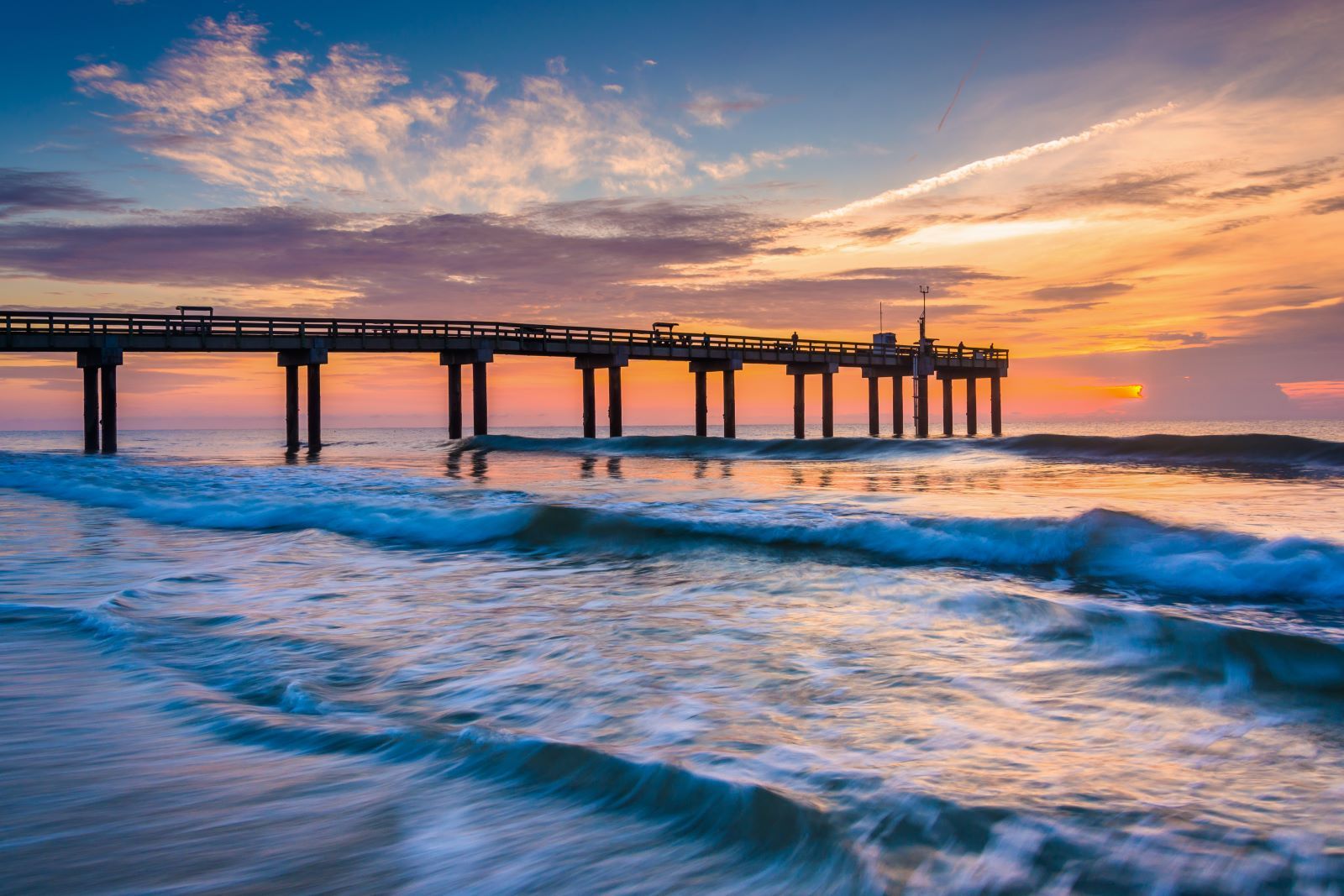
St. Augustine, Florida, holds a unique place in American history as the nation’s oldest continuously inhabited city. Beyond its cobblestone streets and Spanish architecture, the city is tied to a captivating story of raids, defenses, and resilience. For centuries, pirates in St Augustine played a pivotal role in shaping the community’s fate.
From bold attacks to the building of powerful fortifications, their influence left behind a legacy that visitors can still explore today. This post takes you through the dramatic history of piracy in St. Augustine, from legendary raids to modern-day reenactments.
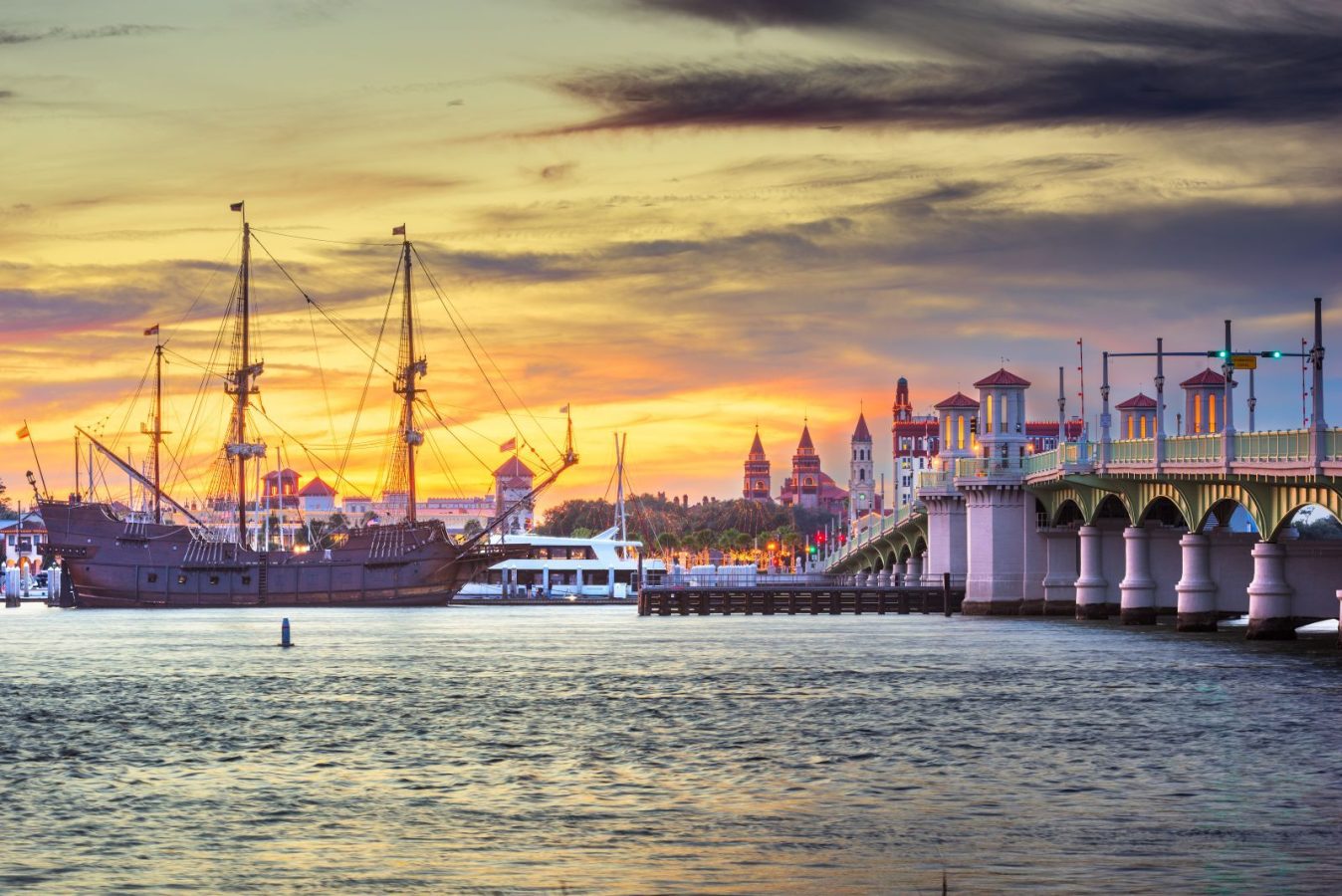
Protecting St. Augustine
Spain founded St. Augustine in 1565 as both a colony and a military outpost. Its location on Florida’s coast made it a strategic hub, guarding Spain’s trade routes that carried treasure across the Atlantic. However, its placement also made it a target.
Early settlers lived in constant fear of pirates, privateers, and rival European navies. To protect the colony, Spain first relied on wooden forts and small garrisons. These defenses often fell short, leaving the settlement vulnerable to devastating attacks. This pattern of destruction and rebuilding became the story of St. Augustine until a more permanent solution was built.
Founding Castillo de San Marcos
The need for stronger defenses became urgent after multiple raids destroyed the town. In 1672, Spain began construction of Castillo de San Marcos, a massive stone fortress designed to safeguard the colony.
The star-shaped fort was strategically designed to deflect cannon fire and provide overlapping fields of defense. Completed in 1695, it was the first permanent stone fort in the region.
The Castillo changed everything for St. Augustine, ensuring that no future pirate or foreign power could easily destroy the town again.
How Was Castillo de San Marcos Made?
What made the Castillo so remarkable was the material used to build it: coquina. This porous stone, formed from compressed seashells, was quarried from nearby Anastasia Island. Coquina was unique because it absorbed cannonballs instead of shattering under fire.
Construction took more than two decades, relying on the labor of Spanish soldiers, Native Americans, and enslaved Africans. Despite the challenges, the fort’s completion signaled the end of St. Augustine’s vulnerability. It became one of Spain’s strongest strongholds in the Americas and remains standing today as a testament to that era.
Famous Pirates
Not all pirates who attacked St. Augustine were simple outlaws. Many acted as privateers, authorized by their governments to raid enemy settlements and ships. England, for instance, granted letters of marque to captains like Sir Francis Drake, blurring the line between pirate and naval officer.
Among the most notorious figures tied to St. Augustine’s history were Francis Drake and Robert Searles. Their raids highlighted both the weakness of the city’s early defenses and the resilience of its people.
Francis Drake Raid
In 1586, Sir Francis Drake led a fleet of 23 ships carrying more than 2,000 men into St. Augustine. At the time, the Spanish settlement was little more than a wooden fort and a small cluster of buildings. Drake’s forces overwhelmed the defenses, looted the town, and burned it to the ground.
The raid left the city in ruins, forcing Spain to rebuild from scratch. It was a humiliating defeat, but it also served as a wake-up call. Spain realized the importance of defending Florida’s coast, setting the stage for future investments in fortifications.
Robert Searles Raid
Eighty-two years later, in 1668, St. Augustine once again faced destruction—this time at the hands of Robert Searles. Commanding an English pirate crew, Searles launched a surprise nighttime attack. His men killed residents, plundered homes, and captured women and children.
The brutality of this raid shocked the Spanish Crown and underscored the town’s vulnerability. It directly influenced Spain’s decision to begin building Castillo de San Marcos just a few years later. Without Searles’ attack, the iconic fortress might never have been constructed.
Experience History Today
Today, St. Augustine honors its past by preserving landmarks, hosting reenactments, and providing immersive learning opportunities. Visitors can explore the very sites where pirate raids took place, bringing this chapter of history to life.
From walking through the Castillo to attending annual events that recreate the infamous raids, there are countless ways to connect with the city’s pirate history. For those seeking hands-on experiences, museums and guided tours offer deeper insights into life in the 16th and 17th centuries.
Pirate Museum
A must-visit attraction is the Pirate Museum in St Augustine, which offers one of the largest collections of authentic pirate artifacts in the world. The museum presents weapons, maps, and even a real pirate treasure chest.
Interactive exhibits let guests try knot-tying, hoist sails, and explore the myths and truths about life on the high seas. More than just a collection, the museum provides context—explaining why piracy flourished and how it affected places like St. Augustine.
Searles’ Raid
Each spring, history comes alive through the reenactment of Searles’ Raid. Actors in period dress march through the streets, firing muskets and cannons to recreate the chaos of the 1668 attack.
This annual event is both educational and entertaining, helping modern audiences understand the scale of destruction and the courage it took for residents to rebuild. It also keeps alive the memory of those who endured one of St. Augustine’s darkest nights.
Drake’s Raid
Another highlight on the city’s calendar is Drake’s Raid, commemorated each May. Participants reenact the 1586 invasion with colorful parades, staged battles, and demonstrations of colonial life.
The event reminds visitors of the fierce struggles between Spain and England during the Age of Exploration. Standing on the same ground where Drake’s men once marched gives today’s audiences a powerful sense of connection to history.
Plan Your Trip!
With the right accommodations, your trip can balance daytime exploration with evening relaxation. Whether you’re walking the ramparts of Castillo de San Marcos, touring museums, or attending reenactments, The Ocean Gallery ensures you have a welcoming retreat to return to.
Book Your St Augustine Vacation Rental with The Ocean Gallery
Exploring pirate history is just one of the many adventures waiting in Florida’s oldest city. After a full day of visiting historic sites and engaging with reenactments, you’ll want a comfortable place to relax.
The Ocean Gallery offers excellent St. Augustine vacation rentals that place you near the city’s top attractions. For those looking for added comfort and convenience, spacious St. Augustine condo rentals provide modern amenities and stunning views, making your stay both enjoyable and memorable.